SAVE $150
Spend $250, Save 10% · Spend $500, Save 15% · Auto-Applied at Checkout
Free Metro Shipping — On Orders Over $200
There’s something quietly magical about gathering around a table filled with dishes made by many hands. It’s a reminder that food has always been more than sustenance, it’s a language of connection.
In Melbourne, Cookbook Club Naarm has become exactly that: a space where strangers become friends over shared recipes, curiosity, and the joy of cooking together. Founded by Joan Tran and Dominique Lonsdale, the club brings together home cooks, cookbook authors, and food lovers each month to cook through a chosen book and share the results at one long communal table.
We sat down with Joan and Dom to talk about the story behind the club, the beauty of cooking across cultures, and the simple power of gathering around good food.
We started Cookbook Club Naarm in August 2024 as a way to find other foodies and like-minded people in Melbourne.
Dom — I’ve always loved to host gatherings and cook for others.
Joan — And I’ve always loved learning new cooking skills, so together it felt natural to build something around our shared passions.
Each month we choose a cookbook and announce it to our followers on Instagram. Around 50 people join us, alongside the cookbook’s author, and everyone brings a dish from the book. Then we lay everything out and share the big meal together. It’s a pretty magical moment seeing an entire cookbook come to life on one long table.
We focus on Australian cookbook authors because we’re incredibly fortunate to have such a rich and diverse food scene here. Through the club we’ve made so many new friends and explored so many cuisines, and we’re just getting started.

I think in this online age people are really craving something tangible in real life. Food is such a universal language, it brings people together regardless of age, income, background, or skill level.
Sharing a meal creates a collective experience where everyone contributes something, and that naturally builds connection.
Our events are an introvert’s heaven because everyone attending is a foodie. You can talk about the dish you made, how the process was, it’s such an easy conversation starter.
It becomes a space that feels free from the usual social pressures and instead turns into a creative culinary experience. At the end of the day, we’re all just there for the same reason: to cook something delicious, share it, and try something new together.

Joan — I mainly learnt to cook from my mum, just by being in the kitchen with her and watching how she moved. The food I grew up eating was very fresh and vibrant, lots of fish sauce, quick dishes, and simple techniques that bring big flavour.
When I moved out, I became really interested in learning new cooking skills and creating dishes from scratch. I like taking the instincts my mum taught me and applying them to other cuisines. Right now I’m deep in a bread-baking phase!
Dom — I grew up around lots of different cuisines in my family, but I really fell in love with food through French cooking. I was a bit of a francophile from a young age (I think my name might have started it) and became obsessed with making crêpes, éclairs and crème brûlée.
I’ve always treasured the Chilean recipes my mum passed down to me, but what my mum and I really bonded over was our shared curiosity for the multitude of cuisines Australia has to offer.
Both — We’re curious people who are always hungry to try something new. There’s something magical about using a spice for the first time, or attempting a dish that feels a little challenging. That sense of discovery is what keeps cooking exciting.

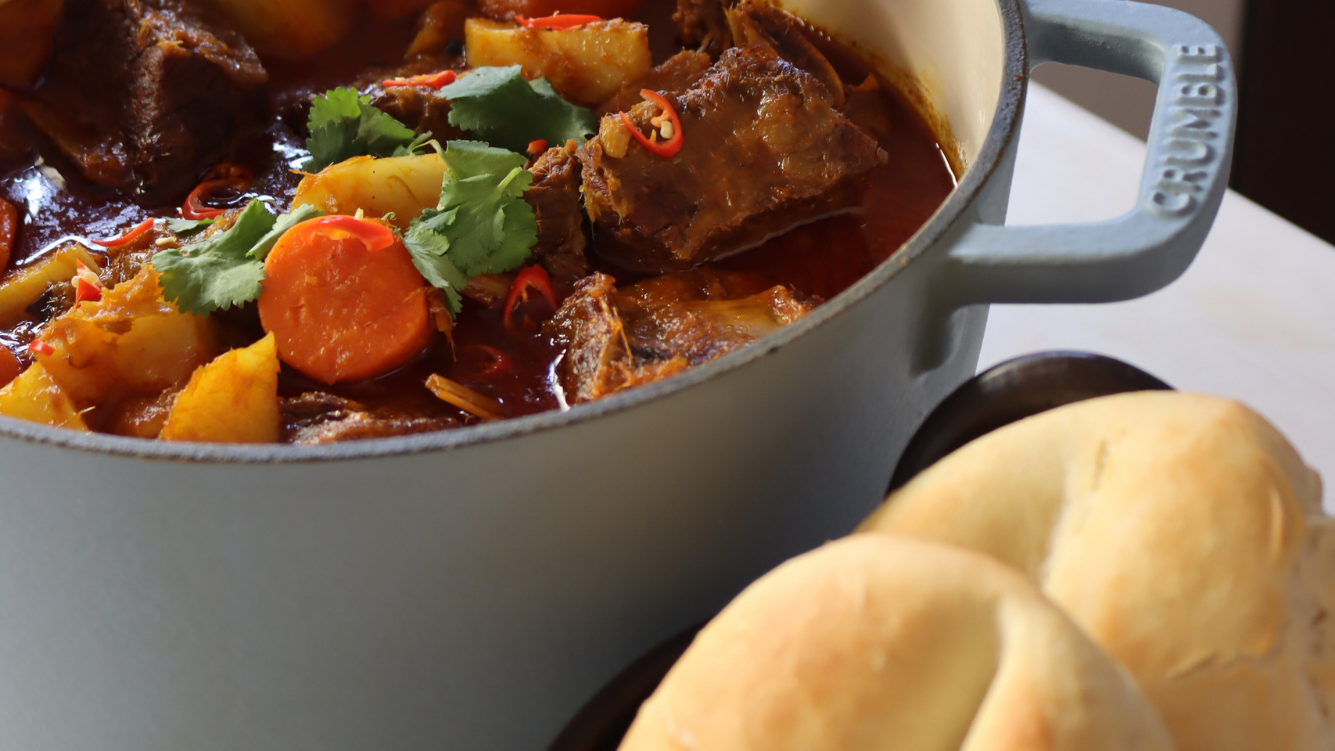
This dish feels like the perfect meeting point between our backgrounds, taking two traditions and creating something new together.
Bò kho itself is loosely inspired by the French pot-au-feu, while marraquetas, a staple in Chilean households, trace their roots back to the French baguette, and therefore also the Vietnamese bánh mì.
Cooking in this kind of circle, where cuisines influence and inspire one another, lets you explore history through food and understand the stories behind certain recipes. It reminds you how connected we all really are.
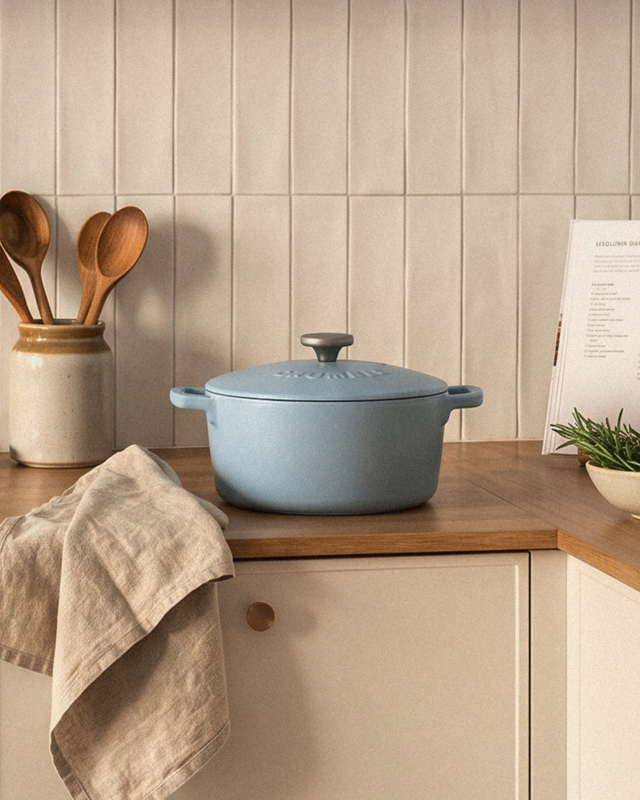
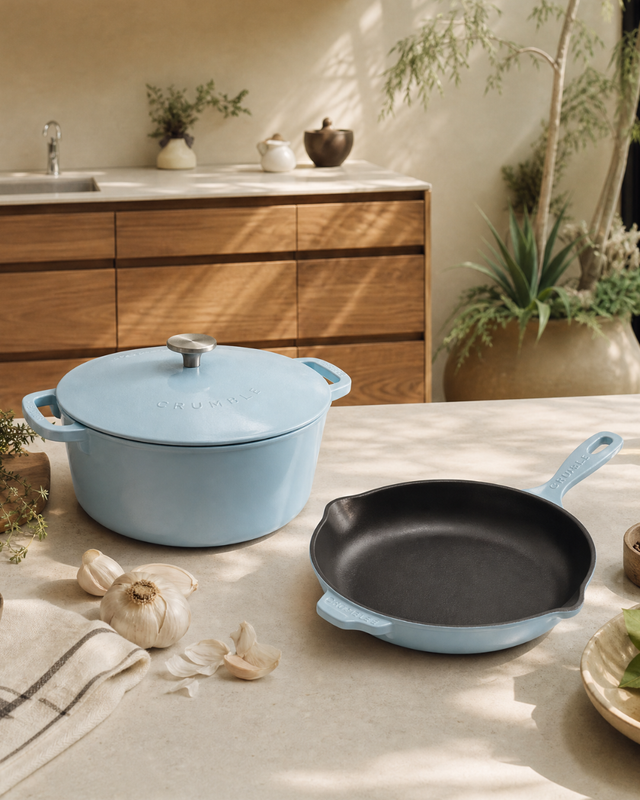
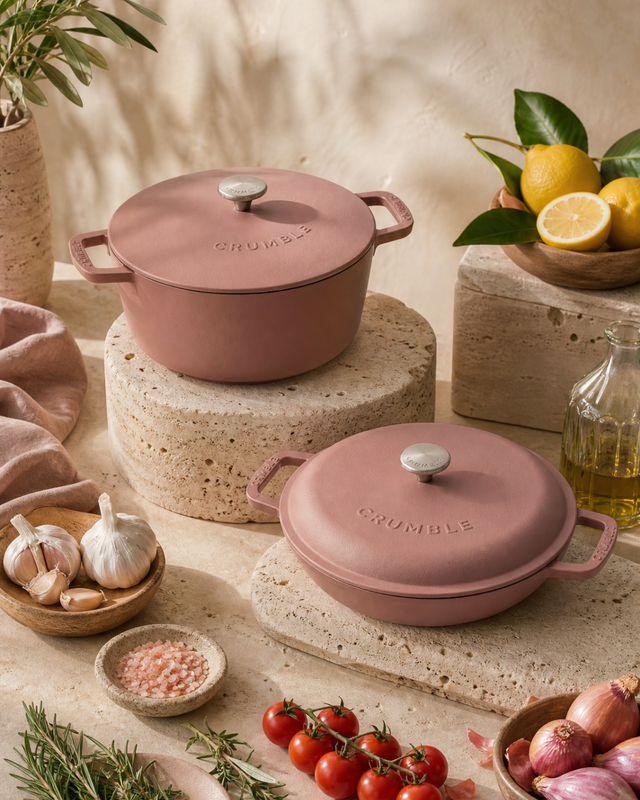
The Crumble Dutch Oven made the spare ribs literally melt off the bone, and the stew developed a much deeper flavour thanks to the cast iron’s steady, even heat. It also meant we could cook everything in one pot, searing, toasting spices, and slowly stewing the dish, which made the whole process beautifully simple.
Bread can be tricky, especially with my unreliable oven, but the Crumble Bread Oven created the perfect environment for an even bake. It made the process foolproof and gave the marraquetas that light, crisp finish we were hoping for.

Joan — It’s a dish I grew up eating. It’s a one-pot meal that’s quite easy to bring together yet so delicious, and you usually make enough to feed the whole family.
It’s perfect for early autumn, when the evenings start to get a little chilly and you’re craving something warming.
The annatto oil mixed with lemongrass is wonderfully fragrant and brings back so much nostalgia from when my mum would make this dish.
We hope people feel welcomed and included the moment they walk in.
Often people arrive on their own feeling a little nervous, but they always leave saying how glad they are that they came. We’ve built a really warm and welcoming community, with many returning members who intentionally make sure everyone feels included.
We’ve seen people become inspired to cook more, recreate dishes they loved that day, and even start their own supper clubs or mini cookbook groups with people they met through CBC.
It’s honestly so wholesome.
Cooking can be messy and imperfect and not always aesthetic!
For us, it’s about the connections that come from sharing food. Food always brings people together.
Cookbook Club is really about building community and creating a space where people in Melbourne can meet, cook, and connect.

We don’t think we ever envisioned CBC becoming what it is today.
The idea started on a whim, simply hoping to find other food lovers we could befriend and eat copious amounts of food with.
But after each event we began to realise something special was happening.
As young women, it can be hard not to feel imposter syndrome, especially when we don’t come from traditional professional cooking backgrounds. We can definitely be our own harshest critics.
But the support from our community constantly lifts us up. We’ve never had to pay for a venue because someone in our network always manages to open a door for us.
That support has helped us realise we’re exactly where we’re meant to be.
For us it means that if you don’t ask, the answer is always no.
Running CBC has taught us to be brave enough to put ourselves out there, even when it feels daunting.
We’ve reached out to cookbook authors to cook with us, sometimes even asking them to fly interstate to join. We’ve asked publishers for cookbook giveaways, venue owners for space, and brands to support what we’re building.
The community that has supported us in return has been incredible.
Learning not to be afraid to ask for what you want, or ask for help, has been one of the biggest lessons CBC has given us.

Home cooking means cooking from the heart.
You don’t always need to measure. You experiment and follow your cravings. Sometimes a memory sparks an idea and suddenly you can’t stop thinking about recreating that dish.
As your skills grow, you realise a home-cooked meal can taste even better than something from a restaurant, because you’ve been part of the whole journey of making it.
For us, cooking for the people we love has always been our love language.

At its heart, Cookbook Club Naarm is a simple idea: cook together, eat together, and see what happens when people gather around food.
What Joan and Dom have created is a reminder that the kitchen doesn’t have to be solitary. It can be a meeting place, for cultures, stories, friendships, and the joy of trying something new.
And sometimes, all it takes to start something special… is inviting people to the table.

Free Metro Shipping Over $200

30 Days Risk Free Trial

Limited Lifetime Warranty